



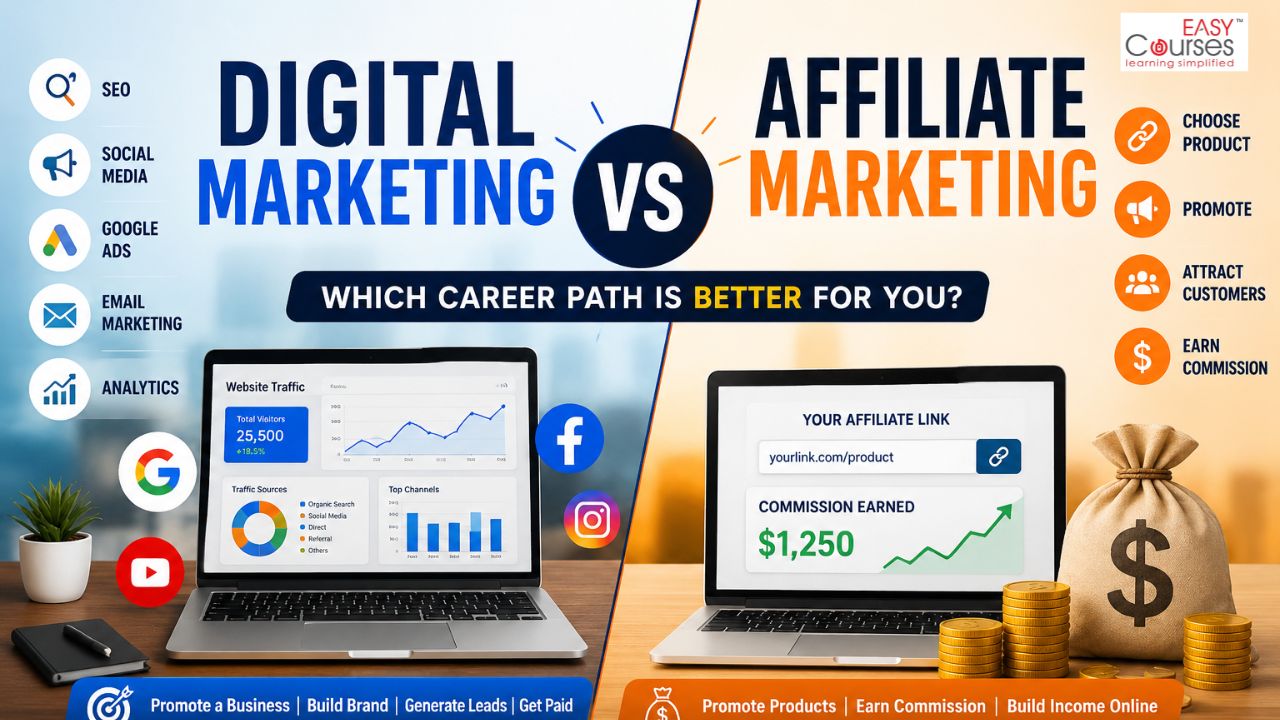
Digital Marketing vs Affiliate Marketing is a common topic among students, job seekers, freelancers, and business owners who want to build a career or earn money online. The internet has changed the way businesses reach customers. Today, companies use online platforms like Google, Facebook, Instagram, YouTube, and websites to promote their products and services. Because of this, online marketing has become one of the fastest-growing industries in the world. Understanding the differences between digital marketing and affiliate marketing can help you choose the right path based on your career goals, skills, and income expectations.
When people start learning about online marketing, they often hear two common terms: Digital Marketing and Affiliate Marketing. Many beginners think they are the same, but they are actually very different. While both involve promoting products or services online, their goals, earning methods, and career opportunities are not the same.
If you are a student, job seeker, freelancer, business owner, or someone looking to earn money online, understanding the difference between digital marketing and affiliate marketing can help you choose the right path. In this guide, we will explain both concepts in simple words and compare them based on skills, income, career opportunities, advantages, and challenges.
What is Digital Marketing?
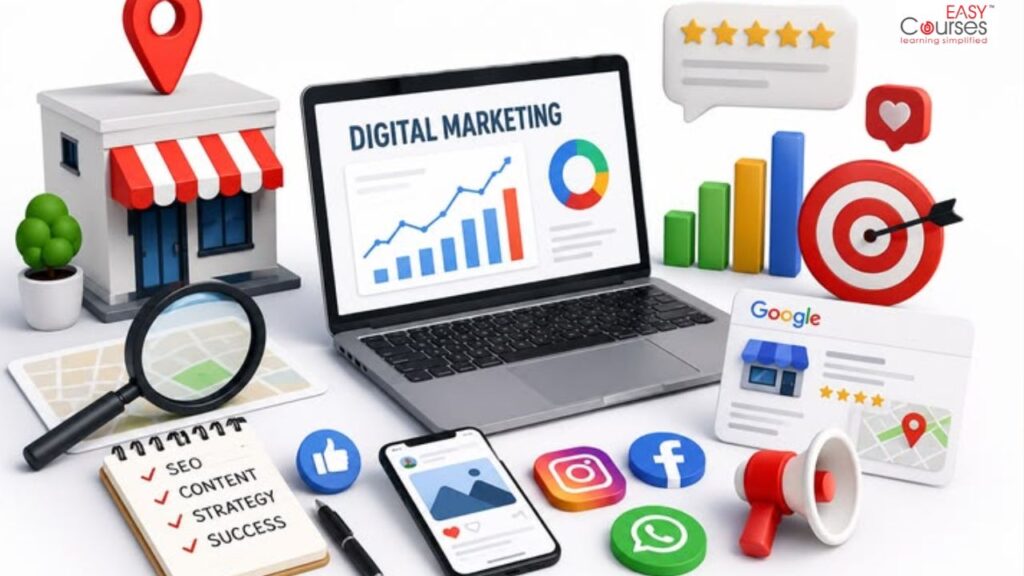
Digital Marketing is the process of promoting a business, product, or service through online channels. These channels include search engines, social media platforms, websites, email, and online advertisements.
The main goal of digital marketing is to help businesses reach more customers, increase brand awareness, generate leads, and improve sales. Companies hire digital marketers to create and manage online marketing campaigns that attract potential customers.
For example, when you search for a product on Google and see advertisements at the top of the search results, those ads are part of digital marketing. Similarly, when you see business promotions on Instagram or Facebook, they are also examples of digital marketing.
Digital marketing has become important because most people spend a large amount of time online. Businesses want to reach these users where they are most active.
Types of Digital Marketing
Digital marketing includes many different methods and strategies. Some of the most popular areas are:
1. Search Engine Optimization (SEO)
SEO is the process of improving a website so that it appears higher in Google search results. Better rankings can bring more visitors to a website without paying for advertisements.
Example:
If someone searches for “best digital marketing course in Thrissur,” SEO helps a training institute’s website appear on the first page of Google.
2. Social Media Marketing (SMM)
Social Media Marketing involves promoting products and services through platforms like Facebook, Instagram, LinkedIn, and Twitter.
Businesses use social media to connect with customers, build trust, and increase brand awareness.
3. Google Ads
Google Ads allows businesses to show paid advertisements on Google search results and partner websites.
It is one of the fastest ways to attract targeted customers.
4. Content Marketing
Content marketing focuses on creating valuable content such as blog posts, videos, infographics, and guides.
Good content helps attract visitors and build trust with potential customers.
5. Email Marketing
Email marketing is used to communicate directly with customers through emails. Businesses use email campaigns to promote products, share updates, and build customer relationships.
6. Video Marketing
Video marketing involves creating and sharing videos on platforms like YouTube, Instagram Reels, and Facebook.
Videos are one of the most effective ways to engage audiences online.
Benefits of Digital Marketing
1. High Demand in Every Industry
Almost every business today needs digital marketing. From small local businesses to large international brands, everyone wants an online presence.
This creates a huge demand for digital marketing professionals.
2. Multiple Career Opportunities
Digital marketing offers many job roles, including:
- SEO Executive
- Social Media Manager
- Content Writer
- Google Ads Specialist
- Digital Marketing Executive
- Email Marketing Executive
- Marketing Analyst
- Digital Marketing Manager
This variety allows professionals to choose a role that matches their interests.
3. Stable Income
Unlike affiliate marketing, digital marketing jobs usually provide a fixed monthly salary.
You can also earn additional income through freelancing or consulting.
4. Opportunity to Start Your Own Agency
After gaining experience, many digital marketers start their own agencies and serve multiple clients.
5. Continuous Learning and Growth
The digital marketing industry is always changing. Learning new tools and strategies helps professionals stay competitive and improve their careers.
Skills Needed for Digital Marketing
A successful digital marketer should have knowledge of:
- SEO
- Social Media Marketing
- Google Ads
- Content Writing
- Email Marketing
- Website Management
- Marketing Analytics
- Lead Generation
- AI Marketing Tools
The good thing about digital marketing is that beginners can start learning these skills without a technical background.
What is Affiliate Marketing?

Affiliate Marketing is one of the most popular ways to earn money online. It is a simple business model where you promote another company’s products or services and earn a commission when someone makes a purchase through your referral link.
Unlike traditional businesses, you do not need to create your own product, manage inventory, handle shipping, or provide customer support. Your main job is to connect potential buyers with the products they are looking for.
For example, if you write a blog about smartphones and recommend a mobile phone using your affiliate link, you will earn a commission whenever someone buys that phone through your link.
Affiliate marketing has become popular because it allows people to start an online business with a low investment. Many bloggers, YouTubers, influencers, and website owners use affiliate marketing to generate income from their content.
How Does Affiliate Marketing Work?
Affiliate marketing follows a simple process:
1. Join an Affiliate Program
The first step is to join an affiliate program offered by a company. Once approved, you receive a unique affiliate link that tracks the visitors and sales generated by you.
2. Promote Products or Services
You can promote products through different online platforms such as:
- Blogs and websites
- YouTube videos
- Facebook pages
- Instagram accounts
- Email newsletters
- WhatsApp communities
- Online forums
The goal is to help people learn about the product and encourage them to make a purchase.
3. Customers Click Your Affiliate Link
When people click your affiliate link, a tracking system records the visit and identifies you as the source of the referral.
4. Earn a Commission
If the visitor purchases the product or completes the required action, you earn a commission. The commission amount depends on the affiliate program and product category.
Types of Affiliate Marketing
Affiliate marketing can be done in different ways depending on your content and audience.
1. Content-Based Affiliate Marketing
This is one of the most common methods. Bloggers write helpful articles, reviews, comparisons, and guides that include affiliate links.
Examples:
- Best Digital Marketing Courses
- Best Laptops for Students
- Top Mobile Phones Under ₹20,000
When readers find the content useful and purchase through the affiliate link, the affiliate marketer earns a commission.
2. Social Media Affiliate Marketing
Many people use Facebook, Instagram, and LinkedIn to promote affiliate products.
They create posts, reels, stories, and videos that introduce products to their followers. If followers buy through the affiliate links, commissions are earned.
3. YouTube Affiliate Marketing
YouTube is one of the fastest-growing affiliate marketing platforms.
Creators make videos such as:
- Product reviews
- Unboxing videos
- Tutorials
- Comparison videos
- Buying guides
Affiliate links are placed in the video description, allowing viewers to purchase products directly.
4. Email Affiliate Marketing
Email marketing is another effective strategy.
Affiliate marketers build an email list and regularly share valuable information, product recommendations, and special offers with subscribers.
This helps increase trust and improve sales.
Benefits of Affiliate Marketing
1. Low Investment
One of the biggest benefits is that you can start with a small budget.
Unlike traditional businesses, there is no need to manufacture products or rent office space.
2.Work from Anywhere
Affiliate marketing gives you the freedom to work from home, a coffee shop, or while traveling.
All you need is a laptop and internet connection.
3.Flexible Working Hours
There are no fixed working hours.
You can create content and manage your affiliate business whenever it is convenient for you.
4. Unlimited Income Potential
There is no fixed earning limit.
The more traffic and sales you generate, the more commissions you can earn.
Many successful affiliate marketers earn a full-time income from their websites and online content.
5. Passive Income Opportunity
Affiliate marketing content can continue generating income long after it is published.
A blog post written today may attract visitors and generate commissions for months or even years.
This makes affiliate marketing an attractive passive income option.
6. No Product Creation Required
Creating products requires time, money, and expertise.
With affiliate marketing, you can focus entirely on promoting existing products instead of developing your own.
7.No Customer Support Responsibility
The company handles customer questions, product delivery, refunds, and technical support.
This allows affiliate marketers to focus on traffic generation and content creation.
Challenges of Affiliate Marketing
Although affiliate marketing offers many benefits, it also has some challenges.
1. Building Traffic Takes Time
Most affiliate websites do not become successful overnight.
It may take several months before you start seeing consistent traffic and commissions.
2. High Competition
Popular niches often have many competitors.
To stand out, you need valuable content and effective marketing strategies.
3. Income Can Be Unpredictable
Affiliate income depends on visitor traffic and customer purchases.
Some months may generate higher earnings than others.
4. Search Engine Updates
Google frequently updates its search algorithms.
These updates can affect website rankings and traffic.
5. Affiliate Programs May Change
Companies can reduce commission rates or discontinue affiliate programs.
Affiliate marketers should avoid depending on a single program.
Which One is Better for Beginners - Digital Marketing and Affiliate Marketing?
For most beginners, Digital Marketing is the better starting point.
Digital marketing provides structured learning, practical skills, and job opportunities. You can start earning a salary while gaining real-world experience.
After learning digital marketing, you can use those skills to build a successful affiliate marketing business.
Many successful affiliate marketers first worked as digital marketers because they learned SEO, content creation, paid advertising, and audience-building techniques.
Future Scope of Digital Marketing and Affiliate Marketing
The future looks bright for both fields.
As more businesses move online, the demand for digital marketing professionals will continue to increase. Companies need experts who can manage websites, social media, SEO, and online advertising.
Affiliate marketing is also growing because more companies are launching affiliate programs to attract customers. Content creators, bloggers, and influencers are finding new ways to earn through affiliate partnerships.
People who learn both digital marketing and affiliate marketing will have more career opportunities and earning potential in the coming years.
Conclusion
Digital Marketing and Affiliate Marketing are both excellent opportunities in the online world, but they serve different purposes. Digital marketing focuses on helping businesses grow online and offers stable career opportunities, while affiliate marketing focuses on earning commissions by promoting products and services. For beginners, digital marketing is often the better choice because it provides practical skills, job opportunities, and long-term career growth. Once you gain experience in digital marketing, you can use those skills to build a successful affiliate marketing business and create additional income streams. By learning both, you can increase your knowledge, expand your career options, and build a stronger future in the digital industry.
If you are looking for a Digital Marketing Course in Thrissur, joining a professional training institute can help you gain hands-on experience in SEO, Social Media Marketing, Google Ads, Content Marketing, Email Marketing, and AI-powered marketing tools. Easy Courses offers industry-focused training, practical projects, and career-oriented learning programs designed to help students and job seekers become job-ready digital marketing professionals. Whether your goal is to secure a digital marketing job, start freelancing, launch an affiliate marketing business, or grow your own brand online, learning digital marketing from a trusted institute can be the first step toward a successful career. Easy Courses is located in Thrissur and provides both classroom and live online training options for learners seeking flexible and practical education.
Frequently Asked Questions
1. What is the main difference between Digital Marketing and Affiliate Marketing?
Digital Marketing focuses on promoting a business, brand, product, or service through online channels to generate leads and sales. Affiliate Marketing focuses on promoting other companies’ products and earning a commission for every successful sale or referral.
2. Which is better for beginners: Digital Marketing or Affiliate Marketing?
Digital Marketing is usually the better choice for beginners because it helps build valuable marketing skills and offers job opportunities. Once you learn digital marketing, you can use those skills to succeed in affiliate marketing as well.
3. Can I do Affiliate Marketing without a website?
Yes, you can promote affiliate products through social media platforms, YouTube channels, email marketing, and other online platforms. However, having a website can help you build trust and generate long-term traffic.
4. How do Affiliate Marketers earn money?
Affiliate marketers earn money by sharing special affiliate links. When someone clicks the link and purchases a product or service, the affiliate marketer receives a commission from the company.
5. Where can I learn Digital Marketing in Thrissur?
If you are looking for a Digital Marketing Course in Thrissur, Easy Courses, Thrissur offers practical training in SEO, Google Ads, Social Media Marketing, Content Marketing, Email Marketing, AI Tools, and more. The course is designed to help students, freshers, job seekers, and business owners gain industry-relevant skills and become job-ready professionals.