



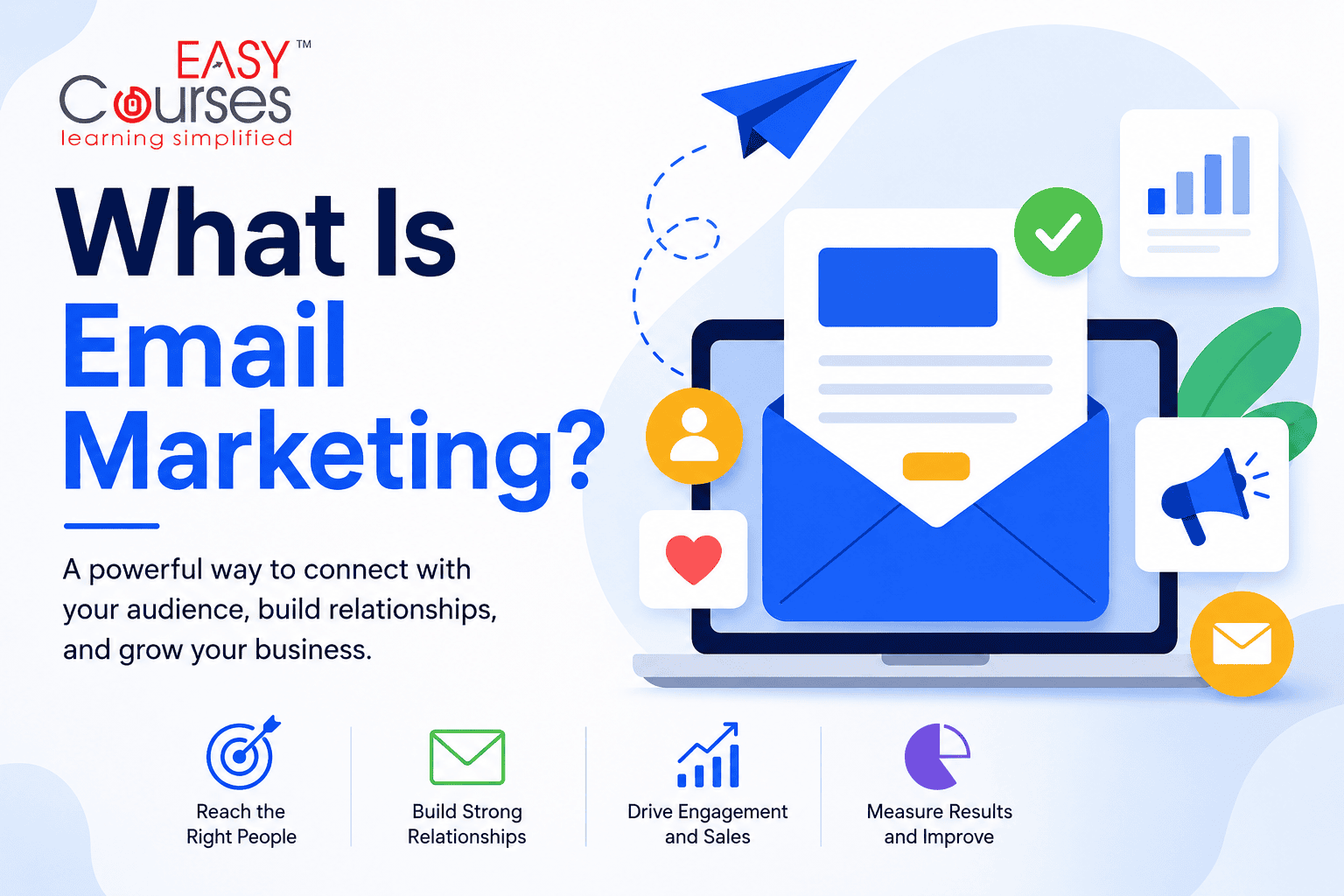
What Is Email Marketing? When people hear “email marketing,” many immediately think of promotional emails, discount offers, or messages filling up their inbox. But email marketing is much more than simply sending promotional emails.
Today, businesses use email marketing to connect with their audience, build relationships, generate leads, promote products and services, share valuable information, and increase sales.
Even with the growth of social media, search engines, and other digital channels, email marketing continues to be an important part of a successful digital marketing strategy.
But what exactly is email marketing? How does it work? What are its benefits, types, and best practices?
In this guide, we will explain what email marketing is, how email marketing works, its benefits, different types, examples, and how businesses can create an effective email marketing strategy.
What Is Email Marketing?
Email marketing is a form of digital marketing that involves sending targeted emails to a group of people to communicate information, promote products or services, generate leads, build customer relationships, or encourage conversions.
Businesses can use email marketing to send:
- Promotional offers
- Product updates
- Newsletters
- Welcome emails
- Special discounts
- Event invitations
- Educational content
- Abandoned cart reminders
- Customer follow-ups
For example, when you sign up for an online store and receive a welcome email with a discount code, that is email marketing.
The main goal is not simply to send emails. A good email marketing campaign delivers the right message to the right person at the right time.
How Does Email Marketing Work?
Email marketing usually follows a simple process.
1. Build an Email List
The first step is to build a list of people who have willingly provided their email addresses.
Businesses can collect email addresses through:
- Website forms
- Landing pages
- Newsletter subscriptions
- Free resources
- Online registrations
- Events and webinars
- Product purchases
It is important to build a permission-based email list instead of purchasing random email databases.
2. Segment Your Audience
Not every customer has the same interests.
Email segmentation allows businesses to divide their audience into different groups based on factors such as:
- Age
- Location
- Interests
- Previous purchases
- Website activity
- Customer status
- Engagement level
For example, an online fashion store could send different emails to customers interested in men’s clothing and women’s clothing.
3. Create the Email
The next step is creating useful and engaging email content.
A good marketing email generally includes:
- An attention-grabbing subject line
- Clear and useful content
- Attractive visuals when appropriate
- A strong call-to-action
- Relevant links
4. Send the Email
Businesses can use email marketing platforms to send campaigns to their subscribers.
These platforms also make it possible to schedule emails, automate campaigns, manage subscribers, and track performance.
5. Analyze Performance
After sending an email, marketers can measure its performance using metrics such as:
- Open rate
- Click-through rate
- Conversion rate
- Bounce rate
- Unsubscribe rate
- Revenue generated
These insights help marketers understand what is working and improve future campaigns.
Why Is Email Marketing Important?
Email marketing is important because it gives businesses a direct communication channel with their audience.
Unlike social media, where businesses depend heavily on platform algorithms, email allows brands to communicate directly with people who have subscribed to their list.
Email marketing can help businesses:
- Generate leads
- Build customer relationships
- Increase sales
- Promote products
- Improve customer retention
- Drive website traffic
- Share valuable information
- Build brand awareness
For small businesses and startups, email marketing can also be a practical way to maintain regular communication with potential and existing customers.
Benefits of Email Marketing
1. Cost-Effective Marketing
Email marketing can be more affordable than many traditional advertising methods.
Businesses can communicate with a large audience without printing brochures, posters, or physical advertisements.
2. Direct Communication
Email provides a direct way to communicate with subscribers.
Businesses can send personalized messages directly to their audience’s inbox.
3. Personalization
Modern email marketing allows businesses to personalize messages based on customer information and behavior.
For example:
“Hi Rahul, here’s a special offer for you.”
Personalized communication can make emails more relevant to the recipient.
4. Lead Generation
Email marketing can help businesses nurture potential customers.
Someone may not be ready to purchase immediately. Regularly providing useful information can keep the business connected with that person until they are ready to make a decision.
5. Increased Sales
Businesses can use emails to promote:
- New products
- Special offers
- Seasonal sales
- Discounts
- Limited-time deals
A well-designed campaign can encourage subscribers to visit a website and make a purchase.
6. Customer Retention
Email marketing isn’t only about finding new customers.
Businesses can use email to stay connected with existing customers and encourage repeat purchases.
7. Measurable Results
One of the biggest advantages of digital marketing is the ability to track performance.
Marketers can analyze campaign data and understand how subscribers interact with their emails.
Types of Email Marketing
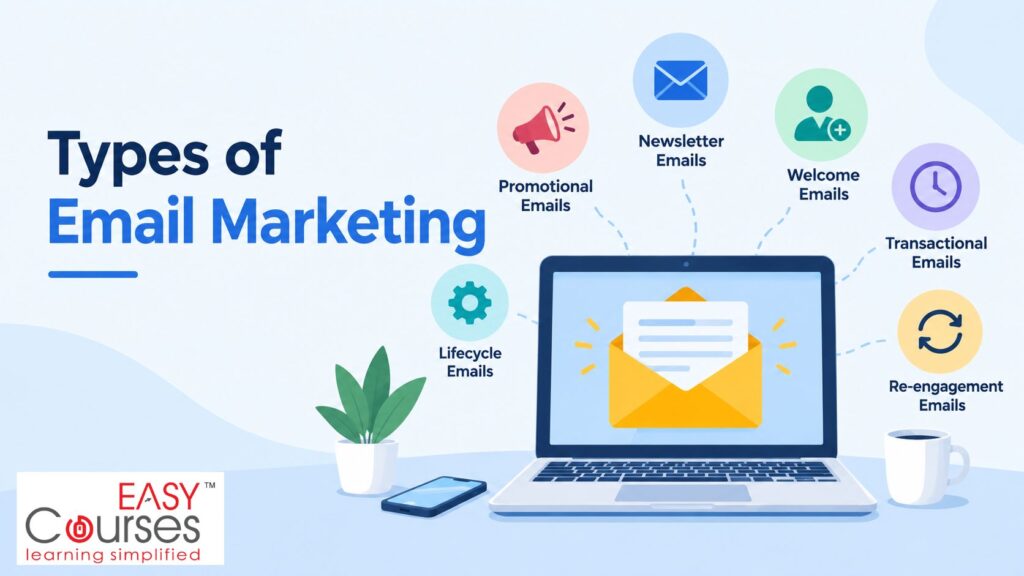
There are several types of email marketing campaigns.
1. Welcome Emails
A welcome email is usually sent after someone subscribes to a mailing list or creates an account.
It can introduce the company, explain what subscribers can expect, and provide useful information.
2. Newsletter Emails
Newsletters are commonly used to share valuable information with subscribers on a regular basis.
A newsletter might include:
- Blog articles
- Industry updates
- Tips
- Company news
- Educational content
- Product updates
3. Promotional Emails
Promotional emails are designed to promote products, services, offers, or discounts.
For example:
“Get 20% Off This Weekend!”
The email normally includes a clear call-to-action that encourages the reader to take action.
4. Product Update Emails
Businesses can use email to inform customers about new products, features, services, or improvements.
5. Abandoned Cart Emails
E-commerce businesses can send reminders when customers add products to their shopping cart but don’t complete the purchase.
These automated emails can encourage customers to return and complete their orders.
6. Event Emails
Businesses can use email marketing to promote:
- Webinars
- Workshops
- Seminars
- Conferences
- Product launches
- Special events
7. Re-Engagement Emails
Some subscribers may stop opening emails.
A re-engagement campaign attempts to bring inactive subscribers back by offering useful content, special offers, or asking whether they still want to receive emails.
Email Marketing Examples
Imagine an online clothing store.
A customer purchases a pair of shoes from the website.
The business could create a series of emails:
Email 1: Thank you for your purchase.
Email 2: Tips for taking care of your shoes.
Email 3: Recommended products related to the customer’s purchase.
Email 4: Special discount for the customer’s next purchase.
This is an example of using email marketing to build a long-term customer relationship instead of focusing only on one transaction.
Another example is an educational institute.
After a student downloads information about a digital marketing course, the institute could send:
- Course information
- Career guidance
- Student success stories
- Free learning resources
- Upcoming demo class information
- Course enrollment offers
This helps the institute nurture the lead until the student is ready to enroll.
What Is an Email Marketing Strategy?
An email marketing strategy is a planned approach for using email to achieve specific business goals.
A basic strategy includes:
Step 1: Define Your Goal
Decide what you want to achieve.
For example:
- Generate leads
- Increase sales
- Promote a service
- Increase website traffic
- Improve customer retention
Step 2: Identify Your Audience
Understand who your target customers are and what information they need.
Step 3: Build Your Email List
Use ethical methods to collect subscribers who are interested in your products, services, or content.
Step 4: Create Valuable Content
Avoid sending promotional emails all the time.
Provide useful information that helps your audience.
Step 5: Segment Your Subscribers
Create different audience groups so you can send more relevant messages.
Step 6: Automate Where Possible
Automation can help businesses send emails based on specific actions.
For example:
New subscriber → Welcome email → Educational emails → Offer → Follow-up
Step 7: Track and Improve
Review campaign performance and test different subject lines, content, offers, and calls-to-action.
Common Email Marketing Mistakes
Many businesses make simple mistakes when starting email marketing.
Some common mistakes include:
- Sending too many emails
- Buying email lists
- Using misleading subject lines
- Sending irrelevant content
- Ignoring mobile users
- Having unclear CTAs
- Not segmenting audiences
- Not tracking results
- Focusing only on sales
Successful email marketing is about building a relationship with the audience, not simply sending promotional messages.
Is Email Marketing Still Effective?
Yes. Email marketing remains an important digital marketing channel because businesses can communicate directly with people who have chosen to hear from them.
However, success depends on the quality of the strategy.
Sending large numbers of generic emails does not automatically produce good results.
Businesses should focus on:
Relevant Audience + Valuable Content + Personalization + Timing + Testing
Conclusion
So, what is email marketing?
Email marketing is a digital marketing technique that allows businesses to communicate directly with their audience through email. It can be used for lead generation, customer engagement, product promotion, sales, and customer retention.
When used correctly, email marketing can become an important part of a company’s overall digital marketing strategy.
The key is simple: don’t just send emails—send useful and relevant messages to the right audience at the right time.
Whether you’re a student learning digital marketing, a small business owner, or a marketing professional, understanding email marketing can help you build stronger customer relationships and create better marketing campaigns.
If you are looking for a Digital Marketing Course in Thrissur, Easy Courses offers practical digital marketing training designed for students, job seekers, entrepreneurs, and working professionals. The course covers important areas such as SEO, Google Ads, social media marketing, AI-powered tools, and real-time projects. Easy Courses also provides internship and placement support to help learners prepare for digital marketing careers.